


Is a dental bridge right for you?
A bridge suits most adults missing one to three teeth in a row whose neighboring teeth are healthy.
- You are missing one or more teeth next to each other
- The teeth on either side are strong, or already need crowns
- You want a fixed tooth rather than one you take out
- You would rather avoid implant surgery, or can’t have it yet
Comparing every option? See ways to replace missing teeth.
Types of dental bridges
Dr. Sayeed recommends a type based on where the gap is and the health of the teeth around it.
Traditional bridge
The most common type. Crowns on the teeth either side hold the false tooth (pontic) in the middle.
Cantilever bridge
Held by a crown on one side only, for a gap with a healthy tooth on just one side.
Maryland bridge
A false tooth with small wings bonded to the back of the neighboring teeth, which are barely reshaped. Often used for a front tooth.
Implant-supported bridge
Held by dental implants instead of natural teeth, to replace several teeth without touching the healthy ones.
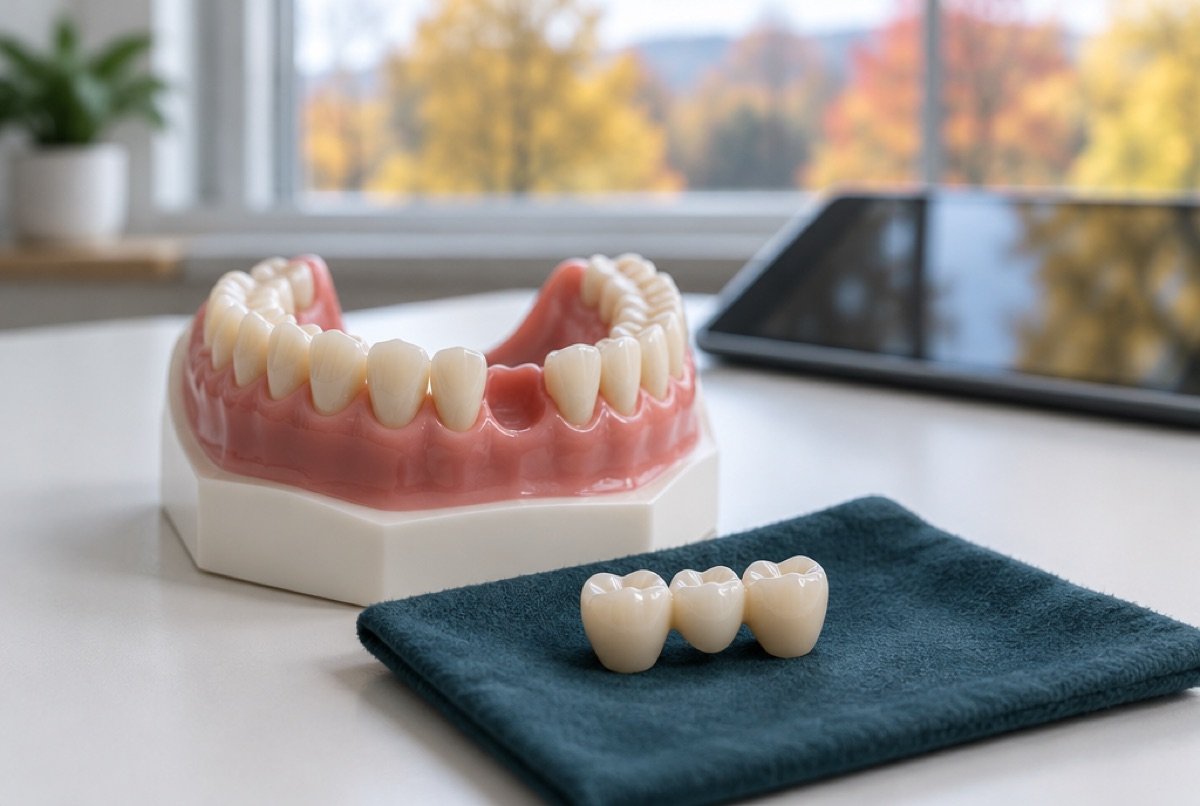
How a bridge is made at Kingston Smiles
- Exam and X-rays. Dr. Sayeed checks the anchor teeth, the gums and the bone under the gap.
- Preparing the anchor teeth. With the area numbed, the teeth either side are shaped to hold crowns.
- Digital scan and temporary bridge. Your teeth are scanned for the lab, and a temporary bridge protects them.
- Fitting. The permanent bridge is cemented and your bite adjusted so it feels natural.
Two visits, usually one to two weeks apart.
Bridge or implant?
Both give you a fixed tooth. The main difference is what holds it.
Dental bridge
- No surgery
- Done in about two weeks
- Neighboring teeth are reshaped to hold it
- Often lasts 10 to 15 years or more
Dental implant
- Minor surgery and a few months of healing
- Neighboring teeth are left alone
- Helps keep the jawbone
- Can last for decades
Caring for your bridge
How long do dental bridges last?
Often 10 to 15 years or more. The bridge lasts as long as the teeth holding it stay healthy, so keeping them free of decay and gum disease matters most.
Brush twice a day and clean under the false tooth every day with a floss threader or a small interdental brush. Regular checkups catch any problem at the edges early.
How much does a dental bridge cost?
A bridge is priced after your exam, and you get the full cost in writing before treatment starts.
- What affects the cost: how many teeth it replaces, the type of bridge, and whether the anchor teeth need treatment first.
- Insurance: most dental plans treat a bridge as a basic or major procedure and pay part of it. We work with CSEA and Kingston Trust Fund plans and most PPO plans, and check your benefits before you commit.
- Spreading the cost: CareCredit and Cherry let you pay over time.
Dental bridge questions
Patients come to us from Kingston, Port Ewen, Lake Katrine, Hurley, Rosendale, Rhinecliff, Saugerties and across Ulster County.
Does getting a bridge hurt?
No. The anchor teeth are numbed while they are prepared. They may feel sensitive for a few days afterward.
Can you eat normally with a bridge?
Yes, once it is fitted. Avoid very hard or sticky food on the temporary bridge, and cut tough food into smaller pieces at first.
What is a Maryland bridge?
A false tooth held by small wings bonded to the back of the teeth beside it. It needs little or no reshaping of those teeth.
What if my bridge feels loose?
Call us on 845-336-5855. A loose bridge can often be recemented, but decay under an anchor tooth needs checking quickly.