


What are the signs of a cavity?
Early decay usually causes no pain at all, which is why checkups and X-rays matter. As it grows, you may notice:
- A twinge with sweet, hot or cold food and drinks
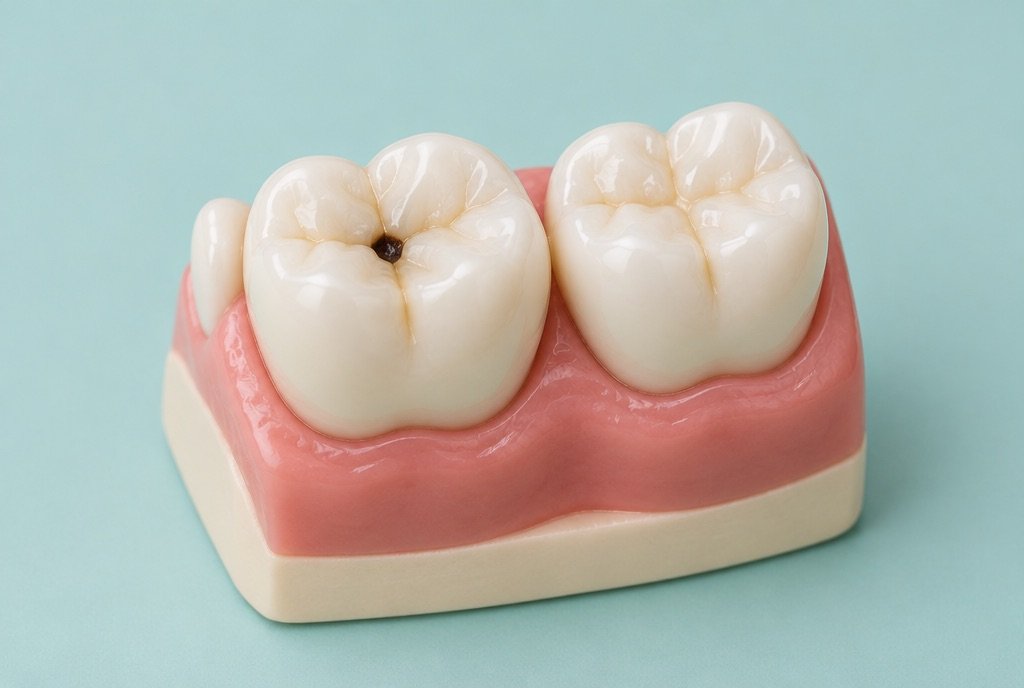
- A white, brown or black spot on a tooth
- A rough edge or a hole you can feel with your tongue
- Food catching in the same place
- An ache when you bite down
- Pain that lingers or wakes you at night
Call us soon if:
- a tooth aches on its own, or the pain lingers
- you have swelling in your gum or face
Call 845-336-5855, or read what to do in a dental emergency.
What are the stages of tooth decay?
The earlier decay is found, the smaller the treatment. This is how it usually progresses.
1
White spots
Acid starts drawing minerals out of the enamel. The surface is still intact.
Usually treated with: fluoride and better home care, which can stop it here (more on white spots)
2
Enamel decay
The enamel breaks down and a small cavity forms. It may still be painless.
Usually treated with: a small tooth-colored filling
3
Dentin decay
Decay reaches the softer layer underneath and spreads faster. Sensitivity starts.
Usually treated with: a larger filling, or a crown if the tooth is weakened
4
Nerve involvement
Bacteria reach the pulp, causing lasting pain or an abscess.
Usually treated with: a root canal to save the tooth, then a crown
How are cavities treated at Kingston Smiles?
Dr. Sayeed examines the tooth and takes digital X-rays, which show decay between teeth that can’t be seen in the mirror. He shows you the images and explains what each option involves before anything starts.
He removes only the decayed part and keeps as much natural tooth as possible. Most cavities are repaired in one visit with a tooth-colored filling, under local anesthetic so the treatment itself doesn’t hurt.
Can a cavity heal on its own?
Only at the white-spot stage, before there’s a hole. Once enamel has broken down, the tooth can’t rebuild it, and the cavity needs a repair.
How do you stop tooth decay coming back?
- Fluoride, twice a day. Brush for two minutes with a fluoride toothpaste, and spit rather than rinse.
- Clean between teeth daily. Floss or interdental brushes reach where cavities often start.
- Fewer sugary snacks and sips. How often you have sugar matters more than how much.
- Regular checkups. Checkups and X-rays catch decay while it’s small.
Tooth decay questions
Patients come to us from Kingston, Port Ewen, Lake Katrine, Hurley, Saugerties, Woodstock and across Ulster County.
Why do I still get cavities if I brush?
Brushing misses the spaces between teeth, and frequent snacks or sugary drinks keep acid levels high. Dry mouth, worn enamel and old fillings with gaps also raise the risk.
What happens if you leave a cavity too long?
It keeps growing. A cavity that needed a small filling can reach the nerve and need a root canal, or the tooth may break or need removing.
Does treating a cavity hurt?
The area is numbed first, so most patients feel pressure rather than pain. The tooth may be slightly sensitive for a few days.
Can tooth decay cause headaches?
It can. An infected or badly decayed tooth can send pain into the jaw, ear or temple. If a headache comes with toothache, a dental check can rule the tooth in or out.
How long does a filling take?
Usually 30 to 60 minutes for one tooth, in a single visit. Read about dental fillings.
Do you treat teens?
Yes, from age 15. Kingston Smiles NY mainly sees adults and teens.