


What dental bonding can fix
Bonding suits small changes to a few teeth, mostly at the front.
Chipped teeth
Rebuilds a small chipped corner or edge so it matches the tooth beside it.
Small gaps
Closes a small space between front teeth by widening them slightly.
Uneven edges
Evens out teeth that are worn, short or slightly different lengths.
Stains that won’t whiten
Covers a single dark or spotted tooth that whitening can’t lighten.
Exposed roots
Covers a root left sensitive by receding gums.
Composite veneers
Bonding over the whole front of a tooth. Compare with porcelain veneers.
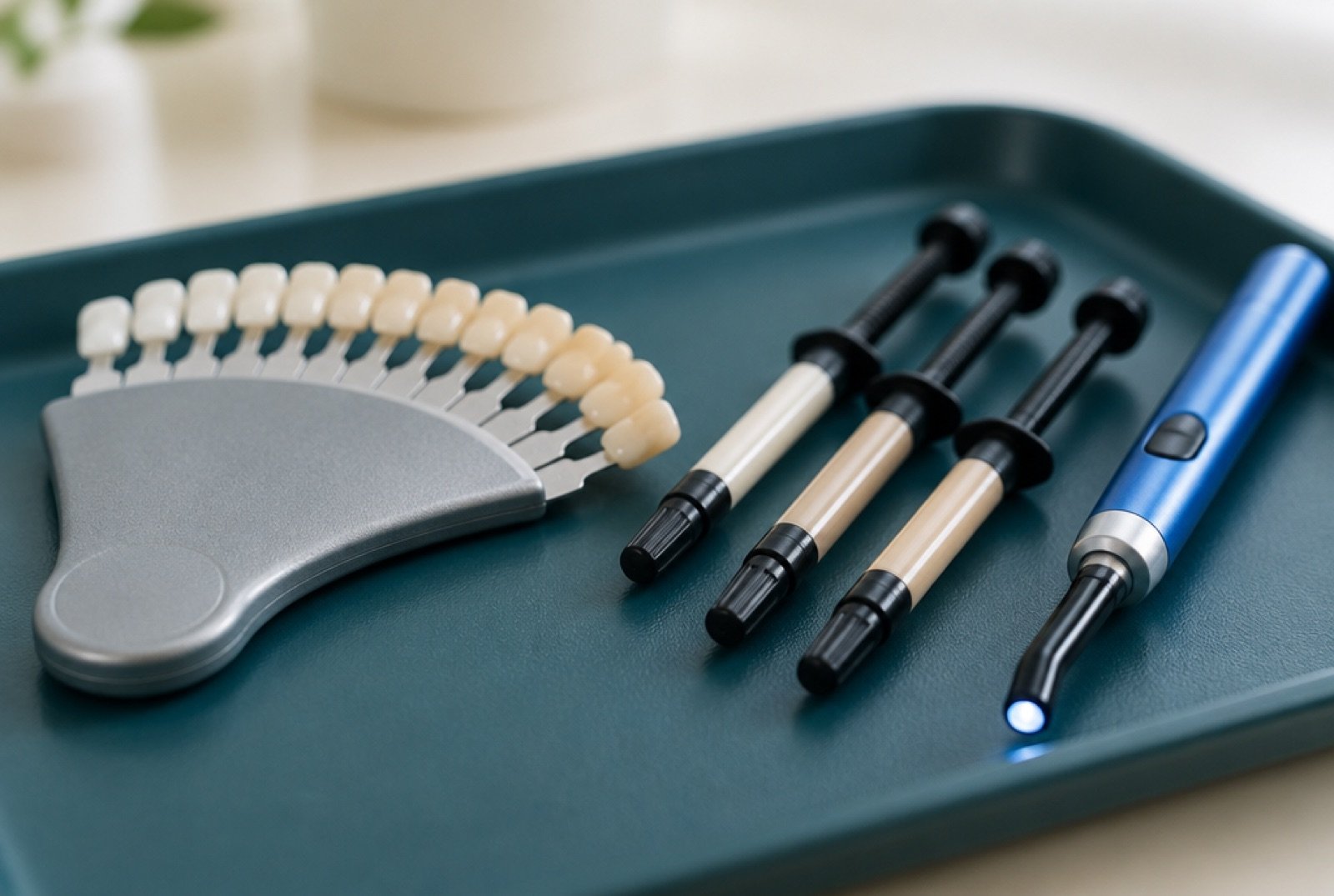
How bonding is done
- Shade matching. Dr. Sayeed picks a resin shade that matches your tooth.
- Preparing the surface. The tooth is lightly roughened so the resin grips. Drilling is rarely needed.
- Shaping. The resin is applied in layers and sculpted by hand.
- Hardening. A blue light sets each layer in seconds.
- Polishing. The tooth is shaped to your bite and polished to a natural shine.
How long does dental bonding take?
About 30 to 60 minutes per tooth, in one visit. You can eat and drink normally straight away.
Is teeth bonding worth it?
For small changes, usually yes. It is quick and keeps your natural tooth, but it isn’t as strong or stain-resistant as porcelain.
Why patients choose bonding
- One visit, usually without numbing
- Little or no enamel removed, so it can be undone
- Costs less than veneers or crowns
- Chips can be repaired quickly
Things to know
- Lasts 3 to 10 years, less than porcelain
- Can stain over time, like natural teeth
- Can chip if you bite nails, pens or ice
- Not suited to large breaks or heavy grinding
Caring for bonded teeth
How long does dental bonding last?
Usually 3 to 10 years. Avoid biting hard objects, cut down on dark drinks, and keep your checkups so Dr. Sayeed can polish or touch up the edges.
Can teeth decay under bonding?
The tooth underneath can still get a cavity if plaque builds up at the edges. Brushing, flossing and regular checkups prevent it.
Chipped a tooth badly?
A large break or a painful tooth needs to be seen soon. See emergency dentistry or call 845-336-5855.
How much does dental bonding cost?
The cost depends on how many teeth are bonded and how much resin each needs. You get the cost before treatment starts.
- Insurance: bonding that repairs a chip or decay is often partly covered; purely cosmetic bonding usually isn’t. We check your plan first.
- Spreading the cost: CareCredit and Cherry let you pay for cosmetic treatment over time.
Dental bonding questions
Patients come to us from Kingston, Hurley, Rosendale, Rhinecliff, Saugerties, Woodstock and across Ulster County.
Does dental bonding hurt?
Usually not. Most bonding needs no numbing because little or no tooth is removed. You feel only light pressure.
Can bonding fix gaps between teeth?
Yes, small gaps between front teeth. Larger gaps or several gaps may be better closed with veneers or by moving the teeth.
What are the downsides of dental bonding?
It doesn’t last as long as porcelain, it can stain, and it can chip. Small chips can usually be repaired in one visit.
Can bonded teeth be whitened?
No. Whitening only lightens natural teeth, so if you plan teeth whitening, do it first and match the bonding to your new shade.