


What your gum measurements mean
At your checkup the space between each tooth and the gum is measured in millimeters. The numbers decide what kind of cleaning you need.
| Pocket depth | What it usually means | What helps |
|---|---|---|
| 1 to 3 mm | Healthy gums | A regular cleaning every six months |
| 4 mm, with bleeding | Gingivitis or early gum disease | A thorough cleaning, better home care and a recheck |
| 5 to 6 mm | Gum disease (periodontitis) | A deep cleaning, then gum maintenance every 3 to 4 months |
| 7 mm or more | Advanced gum disease | A deep cleaning, and often a referral to a gum specialist (periodontist) |
Not sure if your gums are affected? Read about the signs of gum disease.
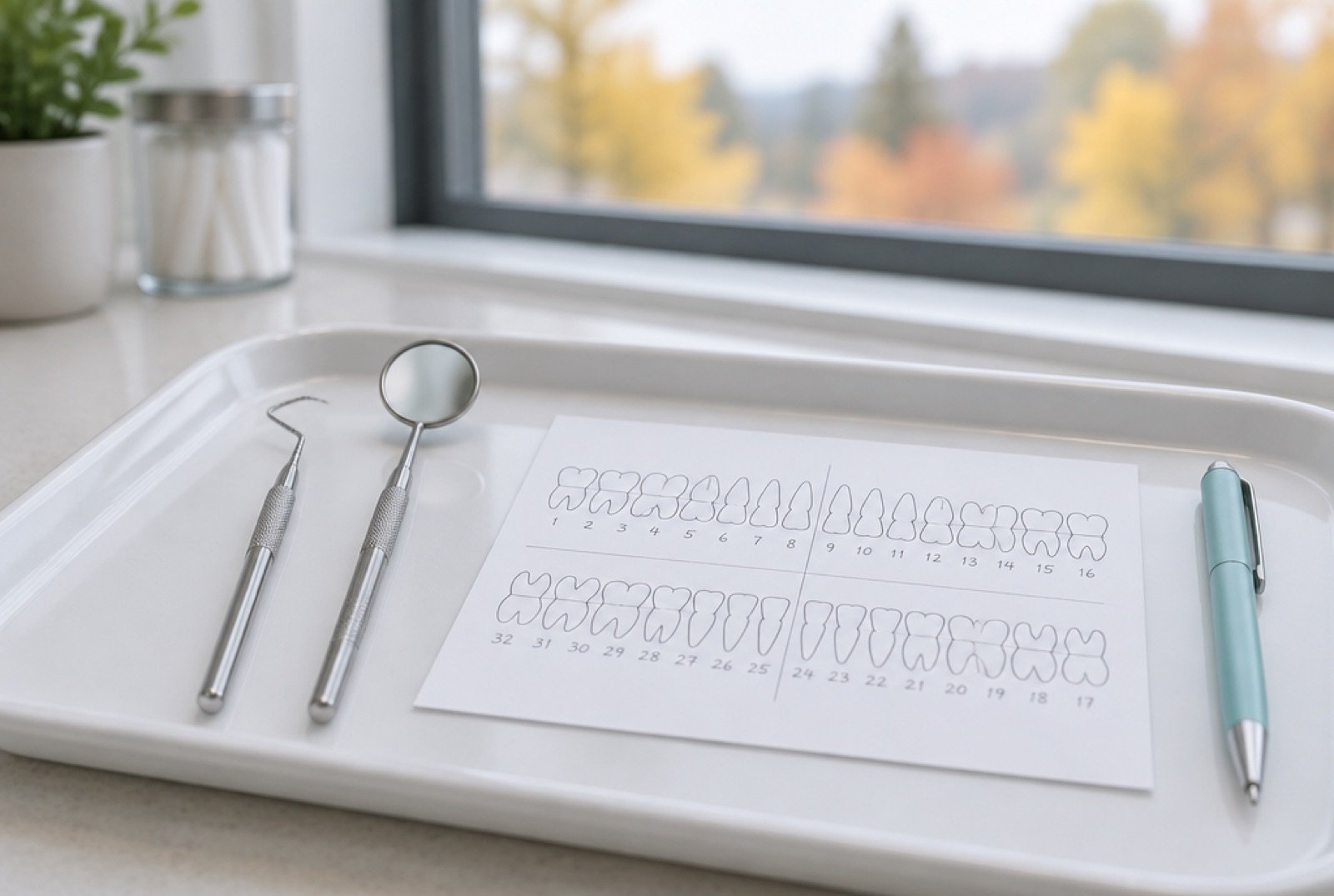
What happens during a deep cleaning
- Measuring. Your gum pockets are measured and recorded, so progress can be compared later.
- Numbing. One side of your mouth is numbed so the cleaning is comfortable.
- Scaling. Ultrasonic and hand instruments remove tartar and bacteria from below the gumline.
- Root planing. The root surfaces are smoothed so the gums can heal and tighten around the teeth.
- Rinsing and recheck. The pockets are rinsed with an antimicrobial solution, and your gums are measured again after a few weeks.
How long does a deep cleaning take?
Usually two visits, one for each side of the mouth, one to two weeks apart.
Does a deep cleaning hurt?
The area is numbed, so you feel pressure and vibration rather than pain. Afterward your gums may be tender and your teeth sensitive to cold for a few days; an over-the-counter pain reliever and warm salt-water rinses help.
Is a deep cleaning necessary?
If your pockets are 5 mm or deeper, yes. A regular cleaning can’t reach that far, and the bacteria left behind keep destroying the bone that holds your teeth. As swelling goes down, gums can look slightly lower, which is a sign of healing.
Compare it with a regular cleaning on our teeth cleaning page.
How to prevent gum disease
Gum disease is easier to prevent than to treat. These habits matter most.
Clean along the gumline
Brush twice a day with a soft brush angled at the gums, and floss or use small brushes between teeth daily.
Keep up your cleanings
Every six months for healthy gums, or every 3 to 4 months after a deep cleaning.
Stop smoking
Smoking is one of the strongest risk factors for gum disease, and it hides the warning sign of bleeding.
Manage diabetes
High blood sugar makes gum infections more likely and slower to heal.
Tell us about changes
Pregnancy and some medications can make gums swell and bleed more easily.
Don’t ignore bleeding
Bleeding gums are the earliest sign. So is bad breath that won’t go away.
How much does a deep cleaning cost?
The cost depends on how many areas of your mouth need it. You get the cost before treatment starts.
- Insurance: most plans cover part of a deep cleaning; some need approval first. We work with CSEA and Kingston Trust Fund plans and most PPO plans, and check your benefits before your visit.
- Gum maintenance visits every 3 to 4 months are priced separately from a regular cleaning.
- Spreading the cost: CareCredit and Cherry let you pay over time.
Deep cleaning questions
Patients come to us from Kingston, Port Ewen, Lake Katrine, Hurley, Saugerties, Rhinebeck and across Ulster County.
Is a deep cleaning worth it?
Yes, if you have gum disease. It stops the infection from spreading deeper and is the main way to avoid losing teeth to gum disease.
What is periodontal maintenance?
A cleaning every 3 to 4 months after a deep cleaning, reaching below the gumline and checking your pocket depths, so gum disease stays under control.
Can I eat after a deep cleaning?
Wait until the numbness wears off, then choose soft foods for a day or two and avoid very hot, spicy or crunchy food.
Can gum disease come back after a deep cleaning?
It can, if plaque builds up again. Good home care and regular gum maintenance visits keep it from returning.