
The short answer
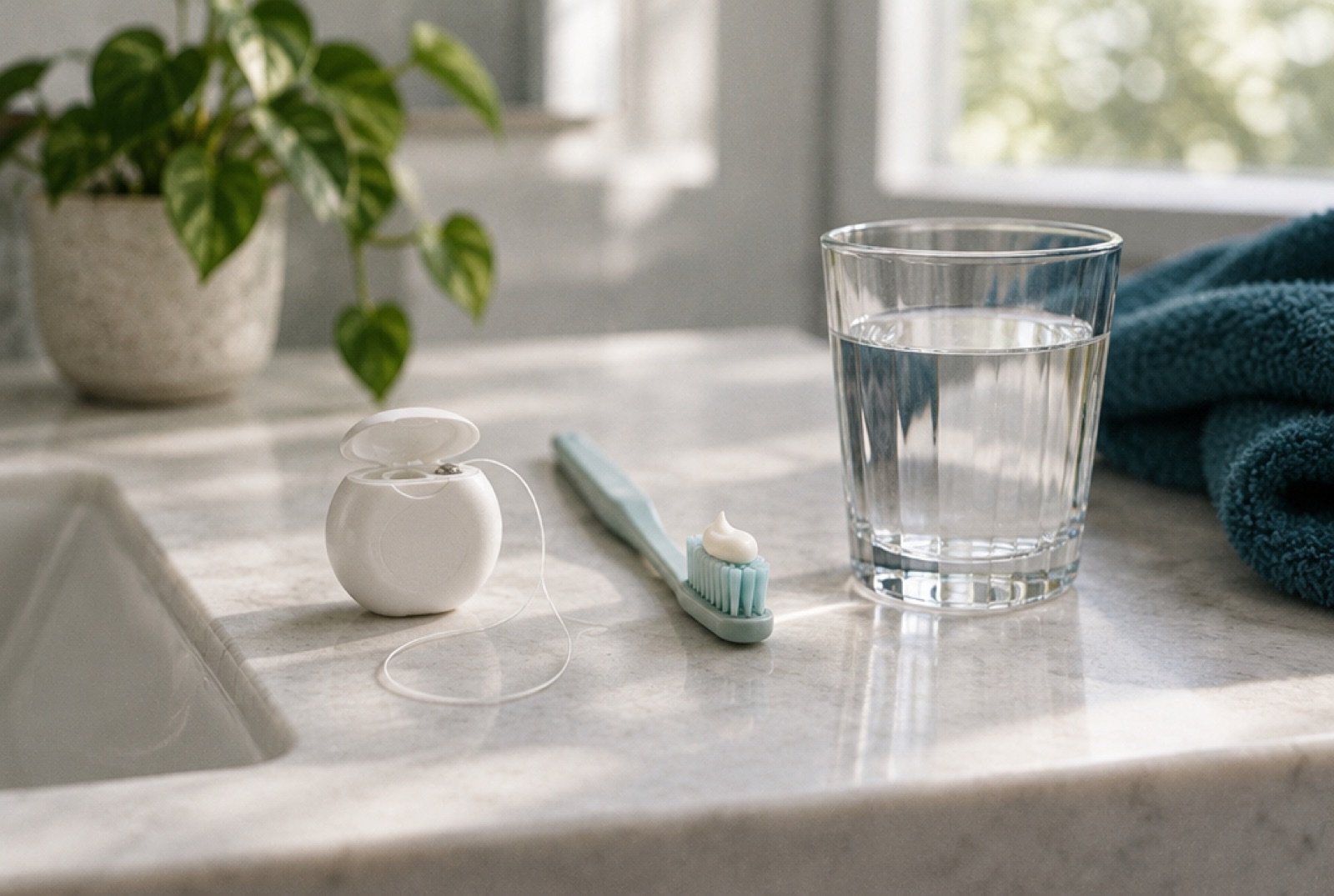
Floss first, then brush. Flossing loosens plaque and food between your teeth, brushing sweeps it away, and the fluoride in your toothpaste can then reach the spaces you just cleared. If you already floss after brushing, keep going: cleaning between your teeth every day matters more than the order.
Is it better to floss before or after brushing?
Before, by a small margin. In a 2018 study published in the Journal of Periodontology, people who flossed first and then brushed removed more plaque from between their teeth than those who brushed first, and more fluoride stayed in the spaces between their teeth afterward. The American Dental Association says either order works if you’re thorough. So floss first if you can, but don’t drop a routine that works for you.
Should you water floss before or after brushing?
The same logic applies. A water flosser rinses out food and loose plaque, so use it first, then brush with fluoride toothpaste. Water flossers, interdental brushes and floss picks all count as cleaning between your teeth. Interdental brushes have some of the strongest evidence where the gaps are wide enough for them.
What order should you floss, brush and use mouthwash?
- Floss or clean between your teeth.
- Brush for two minutes with a fluoride toothpaste, then spit out the foam.
- Mouthwash is optional. If you use one, a fluoride mouthwash at a different time of day keeps the toothpaste’s fluoride on your teeth for longer.
Does it matter more that you floss at all?
Yes. A toothbrush can’t reach between your teeth, and plaque left there is where many cavities start and where gum inflammation begins. Reviews of the research find that adding floss or interdental brushes to brushing reduces gum inflammation more than brushing alone. Once a day is enough.
If your gums bleed when you floss, keep going gently for a week or two. Bleeding that doesn’t settle can be an early sign of gum disease, and a professional cleaning removes the hardened tartar floss can’t.
Does flossing help with bad breath?
It often does. Food and plaque trapped between teeth break down and smell, and a brush can’t reach them. If bad breath stays even with daily flossing, see our page on bad breath.
Flossing questions
Should I floss in the morning or at night?
At night, before your bedtime brush. Your mouth then stays clean through the hours when there’s less saliva to protect it.
Is a water flosser as good as string floss?
Both clean between teeth well. Choose the tool you’ll actually use every day.
Is it OK to floss after brushing if that’s my habit?
Yes. Flossing first gives a small extra benefit, but daily flossing in either order is what counts.
Brushing questions? Read what dentists think of the 3-3-3 rule, or book a checkup and Dr. Ibrahim Sayeed will show you the spots your routine misses.